
Maplewood City Directory Shelves
Maplewood Memorial Library's digitized archive is the strongest local starting point for directory work. Its City Directories collection contains 34 editions spanning 1888 through 1970, although it is not an annual run. The scans sit beside newspapers, photographs, real-estate material, scrapbooks, and yearbooks, so an address can be checked against several dated local sources. The table separates the online directory editions from companion collections and regional holdings. A dated listing can support a historical finding, but it does not establish who is at an address today.
| Collection | Years | Where Held | Access |
|---|---|---|---|
| Maplewood digitized city directories | 1888-1970, 34 editions | Maplewood Memorial Library digital archive | Free scanned editions online |
| Price & Lee's The Oranges | 1963 sample; State Library inventory also lists 1950, 1952, 1965, and 1970 editions | Maplewood archive and New Jersey State Library inventory | Digital scan and holdings research |
| Record and News-Record material | 1903-2024/2025 listing years | Maplewood archive; 1915-present local material at the library | Digital and in-library research |
| Yearbooks and local-history files | Yearbooks 1915-2024 | Maplewood Memorial Library | Older volumes online; latest decade in-library |
There are visible gaps between digitized editions, especially in the early twentieth century. Treat a missing year as a gap in this collection, not proof that a household left Maplewood. The library's digitized collection is the clearest place to identify the exact years that are available before comparing names.
Maplewood City Directory Years Online
The scanned series begins with 1888 and includes editions from the 1890s, early twentieth century, the 1920s through 1940s, and selected volumes through 1970. A search should start at the Maplewood Memorial Library digital archive, which offers collection tiles and a site-wide keyword search. Its scans are not a modern normalized database. OCR can lose punctuation, apartment markers, phone digits, and names, so a failed keyword result deserves a visual look at the appropriate page.
The 1959 material demonstrates why both alphabetical and street views matter. A street page can preserve address order, cross-street context, listed names, and telephone numbers. The alphabetic sample uses a name, a spouse-in-parentheses pattern, occupation or city text, a home or residence marker, address, and phone. These publisher-specific forms are useful evidence only when the reader keeps the cover, year, and page with the extract.
Note: Search a surname with likely OCR substitutions and try a street name without its suffix before deciding the scanned directory lacks an entry.
Maplewood Directory Archive Search
Use the archive's collection tiles to move from a directory result into newspapers, real-estate files, or yearbooks from a similar period. The surrounding collections matter because a directory reports a listing at one publication date, while a newspaper or photograph can add a separately dated local reference.
Maplewood Memorial Library's digital archive displays the directory and companion collection choices shown here.
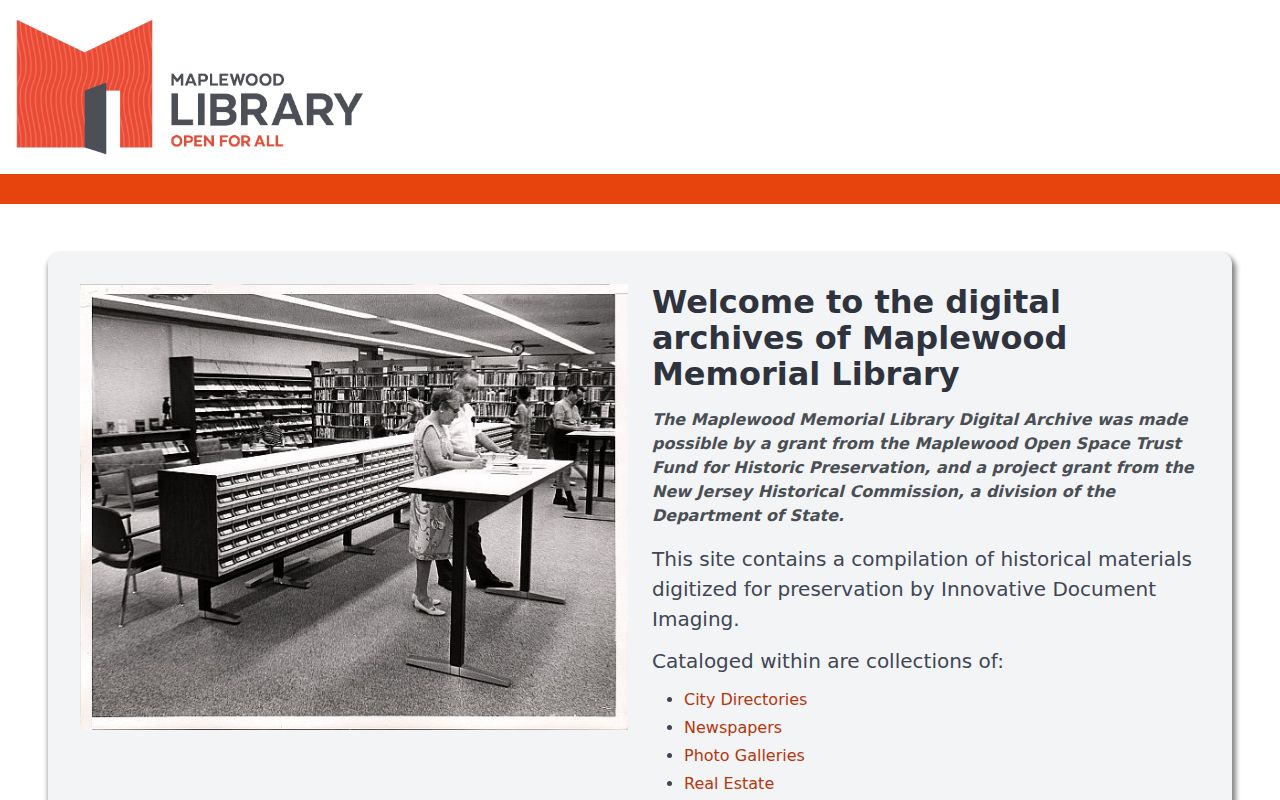
The archive view is a starting shelf, not a claim that every name or address has been indexed. Save the scan link and publication date with each Maplewood result so it can be checked later.
Reading Maplewood City Directory Entries
A directory entry must be read as its publisher printed it. In the 1959 alphabetical sample, a person's name appears with a spouse in parentheses, descriptive occupation or city text, a home or residence marker, an address, and a telephone number. The street sample instead organizes the information by street and numbered address. Neither form is a current identity record. The page year and heading are the controls that keep an address or surname from being taken out of context.
| Name | The alphabetic sample prints the listed name and may place a spouse's name in parentheses. |
|---|---|
| Work or city text | Descriptive occupation or city wording may appear, as printed by that edition. |
| Home marker | A home or residence marker appears in the 1959 alphabetic example. |
| Address and phone | The printed address and telephone entry are historical fields tied to the volume's date. |
| Street context | Street pages may add numbered sequence, cross-street description, unit notation, or a vacant notation. |
- Criss-cross directory
- A street-order directory section used to move from an address to the listings printed along that street.
- Householder index
- An address-led listing that identifies the household or listed party for a particular entry.
- Abbreviation key
- The volume's legend for its own shorthand. Check and retain it before expanding a label from a scan.
Maplewood City Directory Scope Check
The 1963 Price & Lee volume is titled The Oranges, and its scope includes Orange, East Orange, South Orange, and Maplewood. It advertises alphabetical private and business entries, a street and avenue guide with householders, occupants, and telephone numbers, a numerical directory, a buyers' guide, and a classified directory. A name hit therefore needs the volume's municipality and page heading before it can be treated as Maplewood evidence.
The 1959 Briarcliff Court page and Tower Drive page also show why the street heading matters. Briarcliff Court carries a cross-street description and numbered entries. Tower Drive includes unit notation and a vacant entry. Those details document the way an edition organized a street, not uninterrupted residence or ownership. For current address-keyed records, the Maplewood By Street resource uses a separate trail of property and public-record sources.
Note: A vacant mark, a telephone entry, or an omitted name describes one dated directory page and should not be extended beyond that edition.
Maplewood City Directories and Newspapers
Directories become more useful when placed beside the Maplewood archive's Record and News-Record material. The archive identifies newspaper coverage across 1903 through 2024/2025 listing years, and the library's local-history guidance identifies News-Record research from 1915 forward at the library. A newspaper notice can supply a date, event, or spelling to test against a nearby directory edition. It is still a separate source, with its own publication date and possible errors.
The Maplewood File and Real Estate File offer other local-history leads. The real-estate file includes historical photographs and sales records, while the Maplewood File can preserve clippings. These files are finding aids, not a promise that every listed household has a folder. Library staff can help identify the right collection, and the local-history room has published workspace restrictions, so call ahead rather than assume unrestricted walk-in use.
Trace Maplewood City Directory Households
Household tracing works best as a dated sequence. Begin with the version that contains the person or address, then compare the nearest available editions on either side. If the surname is common, pair it with the street name, unit, spouse notation, or the exact page. The New Jersey Historic Preservation Office house-history method adds state census, tax ratables, deeds, probate, and newspapers when a directory gap appears. The goal is a source-by-source timeline, not a claim that a name remained in one place between editions.
- Open the alphabetic and street sections for the same directory year, then save the cover and scanned page URL.
- Record the exact printed spelling, address, phone or unit notation, and the source date without expanding unclear abbreviations.
- Compare the closest available Maplewood editions and mark every gap between publication years.
- Pair a directory period with the New Jersey state census range of 1855-1915 when that older household context is needed.
- Use a dated newspaper, real-estate file, deed, or probate record to test a move, transfer, or family transition.
A disappearance can mean a move, an omitted listing, a publishing gap, a changed spelling, or a death. It is not enough by itself to choose among those explanations. Retaining the page date, publication scope, and a second source makes the trail more reliable.
Maplewood Directory Desk Access
Online scans are only one access channel. Maplewood Memorial Library's local-history contact route points researchers to staff assistance, the Maplewood File, News-Record material, and the Real Estate File. The digital collection is available remotely, but physical access needs a check before a visit because the local-history room is a workspace for staff, affiliates, and Township-board use. The library's published local-history contact information gives 973-762-1688 for a current access check.
Durand-Hedden's Robert H. Grasmere Local History Center adds documents, photographs, maps, family and genealogy files, organizations, businesses, and events. Its page notes a renovation closure, so confirm status before planning a visit. When a Maplewood lead reaches beyond the local shelves, the New Jersey Historical Society archives and the New Jersey State Archives provide regional and county-level research routes.
The New Jersey Historical Society archive browse page is shown here as a regional follow-up source for directory and Essex-area holdings.
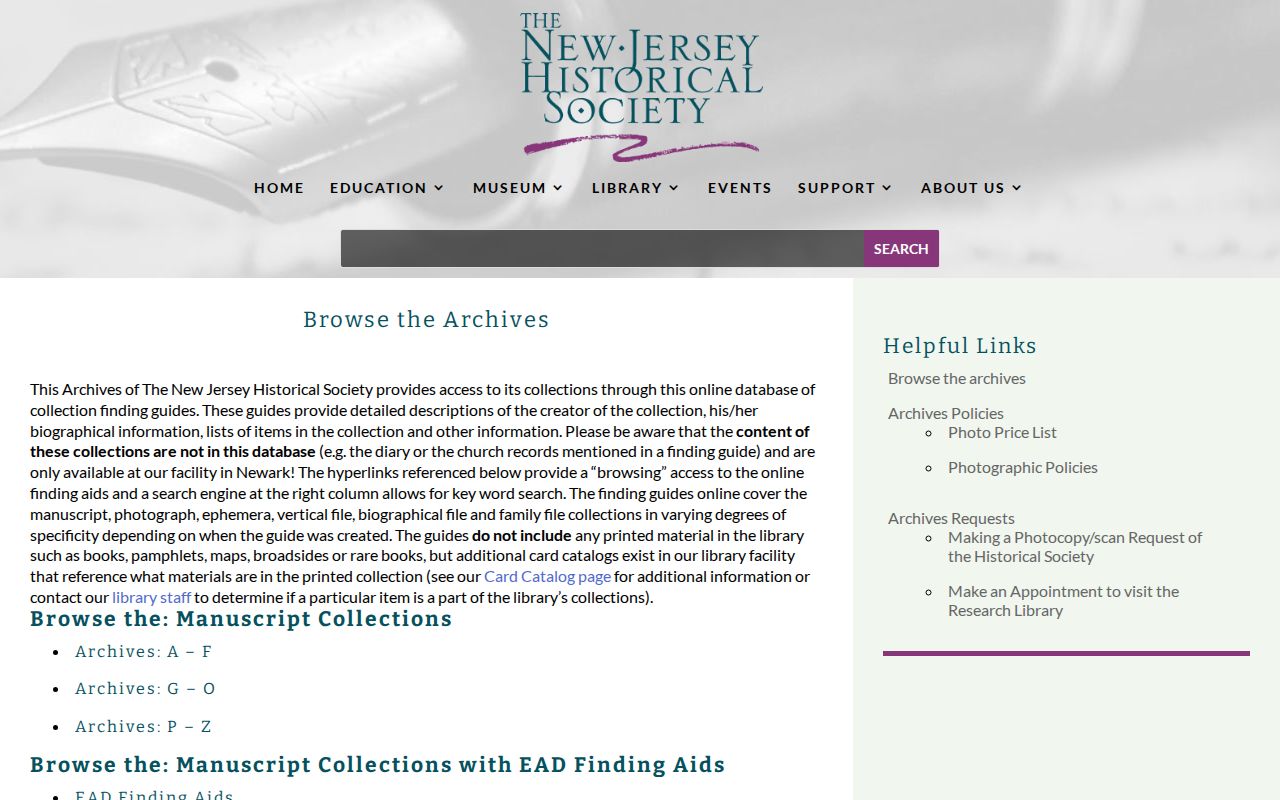
Regional catalog terms may differ from a modern Maplewood search, so use publisher names, nearby municipalities, and Essex County as additional search terms.
Maplewood City Directory Timeline
The directory run records a shift from early printed local volumes to a mixed research environment of scans, library files, county books, and state archives. The following dated points are practical landmarks when organizing a Maplewood directory search.
- 1888: The first edition listed in the digitized Maplewood directory collection.
- 1903: The Maplewood archive's Record and News-Record material begins its listed coverage.
- 1959: The digitized street and alphabetic samples show address sequence, telephone listings, spouse notation, and other publisher formatting.
- 1963: Price & Lee's The Oranges combines Maplewood with three nearby municipalities and includes several directory sections.
- 1970: The last edition in the digitized city-directory run.
The Maplewood directory-years collection shows the available edition list used for that timeline.
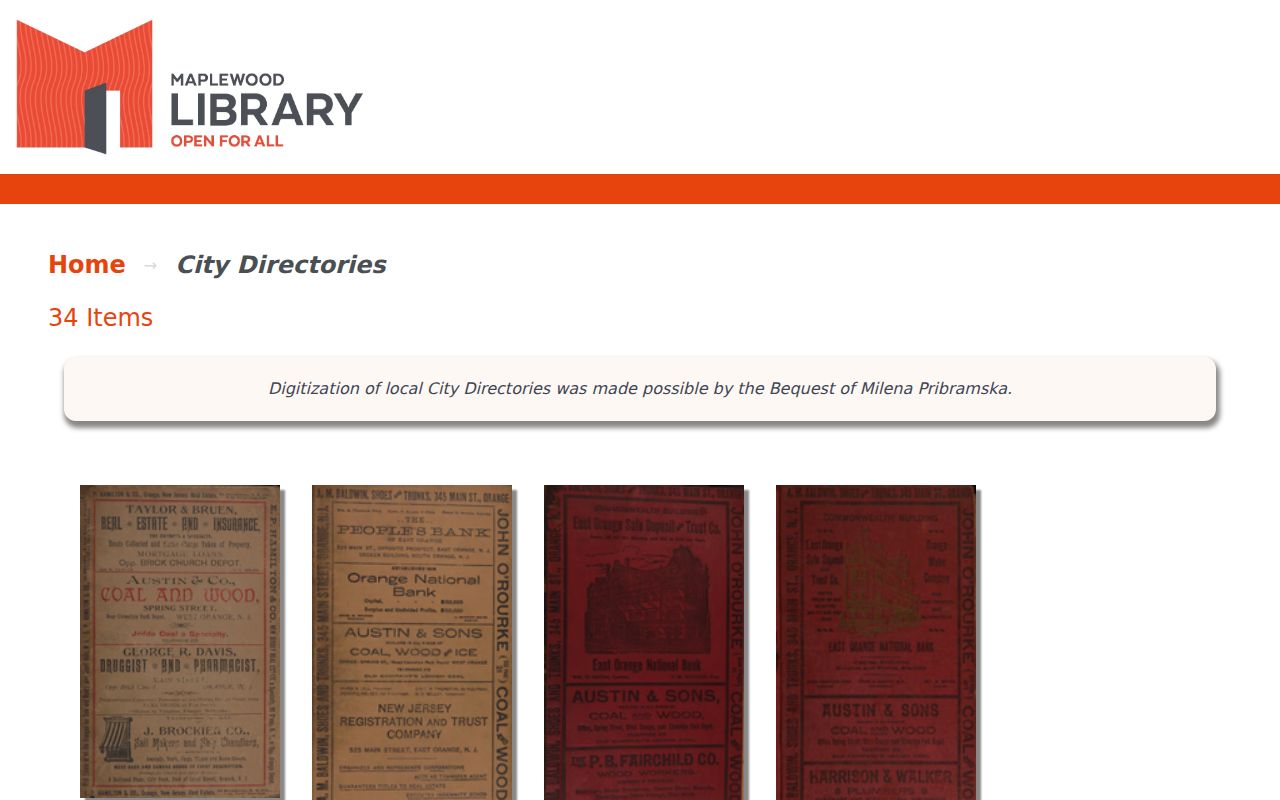
The display makes the missing years visible. That is useful when a household appears to vanish between two Maplewood directory editions.